Blog

  • ISO 3601-3: Visual Inspection Standards for O-Rings – What is Acceptable?

    # ISO 3601-3: Visual Inspection Standards for O-Rings – What is Acceptable?

    Problem Statement: Surface Defects Leading to Seal Failure

    Visual defects in O-rings cause 23% of premature seal failures in hydraulic systems. ISO 3601-3 defines acceptance criteria for surface imperfections like flash lines, porosity, and inclusions. Non-compliance risks fluid leakage under 300+ bar pressure.

    Material Science Analysis

    Nitrile (NBR) fails at >120°C due to acrylonitrile chain scission. Fluorocarbon (FKM) maintains integrity at 200°C because fluorine-carbon bonds require 485 kJ/mol dissociation energy. Hydrogenated Nitrile (HNBR) resists oil swelling better than standard NBR due to saturated backbone.

    Critical Visual Defects per ISO 3601-3

    • Flash Extension: ≤0.25mm height on non-sealing surfaces
    • Pits/Porosity: ≤0.5mm diameter, max 3 defects per 100mm length
    • Inclusions: Zero tolerance on dynamic sealing surfaces
    • Cut Marks: ≤0.2mm depth on static seals

    Technical Specifications

    Parameter FKM (Grade A) HNBR (Grade B) EPDM (Grade C)
    Shore A Hardness 75 ±5 70 ±3 60 ±2
    Tensile Strength (MPa) 17.5 21.0 14.2
    Elongation at Break (%) 200 350 400
    Compression Set (70h @ 200°C) 18% 25% 35%
    Temperature Range (°C) -20 to +200 -40 to +150 -50 to +125

    Quality Assurance Process

    RubberQ’s IATF 16949 system ensures:

    • 100% dimensional inspection per ISO 3601-1
    • Surface defect analysis with 10x magnification
    • Batch traceability via QR-coded material certificates
    • Adhesion testing per ASTM D429 Method B

    For custom material compound development or IATF 16949 documentation, consult RubberQ’s engineering department.

  • Electric Power Transformers: Oil-Resistant Gaskets for High-Voltage Bushings.

    Electric Power Transformers: Oil-Resistant Gaskets for High-Voltage Bushings.

    Electric Power Transformers: Oil-Resistant Gaskets for High-Voltage Bushings

    Problem Statement

    High-voltage bushings in electric power transformers require gaskets that resist mineral oil degradation, maintain sealing integrity under thermal cycling, and prevent compression set failure at pressures exceeding 10 MPa.

    Material Science Analysis

    Standard EPDM compounds fail due to swelling and chemical degradation in mineral oil. Fluorocarbon rubber (FKM) excels due to its high fluorine content (66-70%), which provides superior oil resistance and thermal stability. HNBR offers intermediate performance but lacks the long-term aging resistance of FKM.

    Technical Specs

    • Material: FKM (Fluorocarbon Rubber)
    • Shore A Hardness: 75 ± 5
    • Tensile Strength: 18 MPa
    • Elongation at Break: 200%
    • Temperature Range: -20°C to 200°C
    • Compression Set (22 hrs @ 200°C): ≤ 20%

    Material Comparison

    Material FKM HNBR EPDM
    Oil Resistance (ASTM D2000) Excellent Good Poor
    Temperature Range (°C) -20 to 200 -40 to 150 -50 to 120
    Compression Set (%) ≤ 20 ≤ 30 ≤ 40
    Chemical Resistance High Moderate Low

    Standard Compliance

    RubberQ adheres to IATF 16949 standards for batch-to-batch consistency. Our FKM compounds meet ASTM D2000 and ISO 3601 specifications for oil-resistant sealing applications.

    CTA

    For custom material compound development or IATF 16949 documentation, consult RubberQ’s engineering department.
  • Abrasion Wear: Diagnosing Failure in Dynamic Hydraulic Seals.

    Abrasion Wear: Diagnosing Failure in Dynamic Hydraulic Seals.

    Abrasion Wear: Diagnosing Failure in Dynamic Hydraulic Seals

    Problem Statement

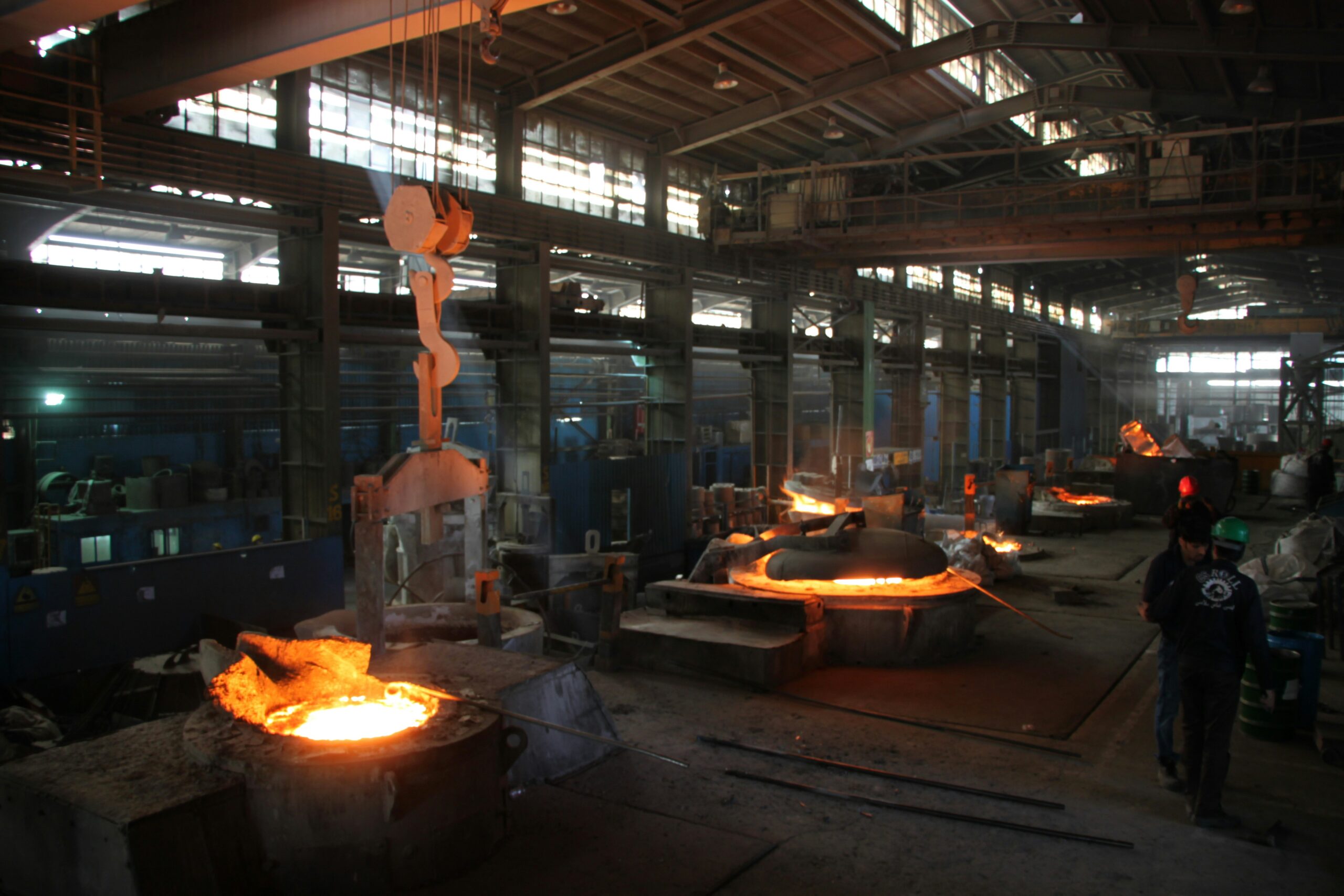
    Hydraulic seals in high-pressure (≥20 MPa) and high-speed (≥0.5 m/s) applications exhibit premature failure due to abrasive wear. The failure mode shows material loss at the sealing lip, leading to fluid leakage and reduced system efficiency.

    Material Science Analysis

    Standard NBR (Nitrile Rubber) fails due to:

    • Low resistance to micro-cutting from hard contaminants (ISO 16232 Class ≥C)
    • Thermal degradation above 100°C reduces elasticity, accelerating wear

    Polyurethane (AU) and HNBR (Hydrogenated Nitrile) outperform NBR because:

    • HNBR’s saturated backbone (≤5% residual double bonds) resists ozone/heat degradation
    • AU’s urethane linkages provide superior tear strength (≥40 MPa vs. NBR’s 20 MPa)

    Technical Specifications

    Parameter NBR (Standard) HNBR (RubberQ RX-742) Polyurethane (AU)
    Shore A Hardness 70 ±5 80 ±3 90 ±2
    Tensile Strength (MPa) 18 25 45
    Elongation at Break (%) 300 350 500
    Temperature Range (°C) -30 to +100 -40 to +150 -20 to +80
    Compression Set (%, 22h @ 100°C) 35 15 10
    Abrasion Resistance (mm³ loss, DIN 53516) 120 60 30

    Root Cause Analysis Protocol

    1. Wear Pattern Inspection: Use 10x magnification to identify cutting (sharp grooves) vs. rolling abrasion (smooth pits)
    2. Contaminant Analysis: Conduct ISO 16232 fluid cleanliness testing to quantify particulate size/distribution
    3. Cross-Sectional Hardness (ASTM D2240): Check for surface hardening (>5 Shore A increase indicates thermal degradation)

    IATF 16949 Quality Assurance

    RubberQ’s production process ensures:

    • Batch-to-batch viscosity control (±5% via Mooney Viscometer, ASTM D1646)
    • Bond strength verification (≥3.5 MPa peel strength, ASTM D429 Method B)
    • Post-cure dimensional stability (ISO 3601-1 tolerance class F8)

    For custom material compound development or IATF 16949 documentation, consult RubberQ’s engineering department.
  • Industrial Drones: Lightweight Rubber Dampers for Camera Gimbal Stabilization.

    Industrial Drones: Lightweight Rubber Dampers for Camera Gimbal Stabilization.

    Industrial Drones: Lightweight Rubber Dampers for Camera Gimbal Stabilization

    Problem Statement

    Camera gimbal stabilization in industrial drones requires lightweight rubber dampers with high damping efficiency and minimal compression set. Traditional materials fail under rapid cyclic loading and extreme temperature fluctuations, leading to vibration transmission and image distortion.

    Material Science Analysis

    Silicone rubber (VMQ) outperforms EPDM and NBR due to its superior elasticity and thermal stability. VMQ’s Si-O-Si backbone provides flexibility across a wide temperature range. EPDM degrades at high temperatures (>120°C), while NBR exhibits poor compression set under cyclic loading. VMQ maintains damping efficiency even at -60°C to 200°C.

    Technical Specs

    • Material: VMQ (Silicone Rubber)
    • Shore A Hardness: 40 ± 5
    • Tensile Strength: 8 MPa
    • Elongation at Break: 500%
    • Temperature Range: -60°C to 200°C
    • Compression Set: <10% (22 hours at 150°C)
    • Chemical Resistance: Resistant to oils, fuels, and mild acids

    Material Comparison

    Parameter VMQ EPDM NBR
    Temperature Range (°C) -60 to 200 -50 to 120 -40 to 100
    Compression Set (%) <10 20-30 25-35
    Chemical Resistance High Moderate Low
    Shore A Hardness 40 ± 5 50 ± 5 60 ± 5

    Standard Compliance

    RubberQ adheres to IATF 16949 standards for batch-to-batch consistency. Our VMQ compounds meet ASTM D2000 and ISO 3601 specifications for sealing and damping applications. Surface preparation and bonding processes comply with ASTM D429 for zero-delamination quality.

    For custom material compound development or IATF 16949 documentation, consult RubberQ’s engineering department.

  • Coolant Manifolds in EVs: Why EPDM remains the Standard for Thermal Management.

    Coolant Manifolds in EVs: Why EPDM Remains the Standard for Thermal Management

    Problem Statement

    Coolant manifolds in electric vehicles (EVs) require materials that withstand continuous exposure to ethylene glycol-based coolants, temperatures up to 150°C, and cyclic pressure changes. Many polymers degrade chemically or exhibit poor compression set under these conditions.

    Material Science Analysis

    EPDM (Ethylene Propylene Diene Monomer) excels in this application due to its saturated hydrocarbon backbone. This structure provides superior resistance to heat, oxidation, and polar fluids like ethylene glycol. Fluorocarbon elastomers (FKM) offer higher temperature resistance but fail in cost-effectiveness and compatibility with glycol-based coolants. Silicone (VMQ) struggles with compression set and tear strength.

    Technical Specs

    • Shore A Hardness: 70 ± 5
    • Tensile Strength: 12 MPa
    • Elongation at Break: 300%
    • Temperature Range: -40°C to 150°C
    • Compression Set: 20% (22 hours at 150°C)

    Material Comparison

    Material Temperature Range (°C) Compression Set (%) Chemical Resistance (Ethylene Glycol) Cost Index
    EPDM -40 to 150 20 Excellent 1.0
    FKM -20 to 200 15 Poor 3.5
    VMQ -60 to 200 35 Good 2.8

    Standard Compliance

    RubberQ adheres to IATF 16949 standards for batch-to-batch consistency. Our EPDM compounds meet ASTM D2000 and ISO 3601 specifications for sealing applications. Surface preparation and curing processes ensure zero delamination in rubber-to-metal bonding.

    For custom material compound development or IATF 16949 documentation, consult RubberQ’s engineering department.

  • Cryogenic Sealing: Managing Seal Flexibility at -100°C for LNG Applications.

    Cryogenic Sealing: Managing Seal Flexibility at -100°C for LNG Applications.

    Cryogenic Sealing: Managing Seal Flexibility at -100°C for LNG Applications

    Problem Statement

    Cryogenic environments, such as LNG applications, demand seals that maintain flexibility and integrity at temperatures as low as -100°C. Standard elastomers like NBR and EPDM exhibit severe embrittlement and compression set failure under these conditions, leading to leakage and system downtime.

    Material Science Analysis

    At cryogenic temperatures, polymer chains lose mobility, causing brittleness. Fluorocarbon elastomers (FKM) fail due to their limited low-temperature flexibility. Silicone-based materials (VMQ) perform better but lack chemical resistance to hydrocarbons. Hydrogenated Nitrile Butadiene Rubber (HNBR) emerges as the optimal solution due to its saturated backbone, which provides excellent low-temperature flexibility (-50°C to -100°C) and resistance to hydrocarbons.

    Technical Specs

    • Material: HNBR
    • Shore A Hardness: 70 ± 5
    • Tensile Strength: 20 MPa
    • Elongation at Break: 300%
    • Temperature Range: -100°C to 150°C
    • Compression Set: 15% (22 hours at -40°C)

    Material Comparison

    Parameter HNBR FKM VMQ
    Temperature Range (°C) -100 to 150 -20 to 200 -60 to 200
    Compression Set (%) 15 30 20
    Chemical Resistance Excellent Good Poor
    Elongation at Break (%) 300 200 400

    Standard Compliance

    RubberQ adheres to IATF 16949 standards, ensuring batch-to-batch consistency in material properties. Our HNBR formulations comply with ASTM D2000 for material callouts and ISO 3601 for sealing performance. Surface preparation and bonding processes meet ASTM D429 adhesion testing requirements.

    For custom material compound development or IATF 16949 documentation, consult RubberQ’s engineering department.

  • Hydraulic Fracturing (Fracking): High-Pressure Packing Elements in HNBR.

    Hydraulic Fracturing (Fracking): High-Pressure Packing Elements in HNBR.

    Hydraulic Fracturing: High-Pressure Packing Elements in HNBR

    Problem Statement

    Hydraulic fracturing (fracking) demands packing elements capable of withstanding extreme pressures (up to 15,000 psi), high temperatures (up to 150°C), and aggressive chemical exposure (e.g., hydrocarbons, acids). Traditional NBR compounds fail due to chemical degradation and excessive compression set under cyclic loading.

    Material Science Analysis

    Hydrogenated Nitrile Butadiene Rubber (HNBR) excels in fracking applications due to its saturated polymer backbone. The hydrogenation process eliminates double bonds, enhancing thermal stability and chemical resistance. HNBR’s high acrylonitrile content ensures superior resistance to hydrocarbons, while its fluorine-free composition maintains cost-effectiveness compared to FKM.

    Technical Specs

    • Shore A Hardness: 80 ± 5
    • Tensile Strength: 25 MPa
    • Elongation at Break: 350%
    • Temperature Range: -40°C to 150°C
    • Compression Set (70h @ 150°C): ≤ 20%

    Material Comparison

    Material HNBR NBR FKM
    Temperature Range (°C) -40 to 150 -30 to 120 -20 to 200
    Compression Set (%) ≤ 20 ≥ 40 ≤ 15
    Chemical Resistance High Moderate Very High
    Cost Efficiency High Very High Low

    Standard Compliance

    RubberQ adheres to IATF 16949 standards, ensuring batch-to-batch consistency in HNBR compounding. Our in-house mixing process (A炼) controls polymer ratios, fillers, and curing agents to meet ASTM D2000 specifications. ISO 3601 compliance guarantees sealing performance under high-pressure conditions.

    For custom material compound development or IATF 16949 documentation, consult RubberQ’s engineering department.

  • Surface Blooming: Is that White Powder on your Rubber Part a Defect?

    Surface Blooming: Is that White Powder on your Rubber Part a Defect?

    Surface Blooming: Is that White Powder on your Rubber Part a Defect?

    Problem Statement

    A white powdery residue (blooming) appears on EPDM rubber seals after 72 hours of heat aging at 150°C. The customer suspects material degradation, but the root cause is likely unreacted curing agents migrating to the surface.

    Material Science Analysis

    • Primary Cause: Excess sulfur or stearic acid in the compound migrates to the surface during post-cure cooling.
    • Molecular Mechanism: Low solubility of curatives in EPDM at room temperature forces phase separation. The issue worsens with high-temperature cycling.
    • Solution: Reformulate with peroxide curing (no sulfur) or optimize accelerator-to-sulfur ratios. RubberQ’s in-house compounding adjusts curative dispersion at the 0.5-1.2 phr level.

    Technical Specs

    • Material: RubberQ EPDM-700 (Peroxide-Cured)
    • Shore A Hardness: 70 ±5
    • Tensile Strength: 12 MPa (ASTM D412)
    • Elongation at Break: 350%
    • Temperature Range: -40°C to +175°C continuous
    • Compression Set: 22% (70h at 150°C, ASTM D395)
    Parameter EPDM-700 (Peroxide) EPDM-600 (Sulfur-Cured) FKM-800 (Fluorocarbon)
    Blooming Risk None High (Grade 3 per ASTM D2000) Low
    Chemical Resistance (ASTM Oil #3, 70h) Volume Change +8% Volume Change +12% Volume Change +2%
    Adhesion to Steel (ASTM D429) 15 kN/m 12 kN/m 18 kN/m
    Cost Index 1.0x 0.7x 3.2x

    Standard Compliance

    RubberQ’s IATF 16949-certified process prevents blooming through:

    • Pre-dispersion of curatives in a masterbatch (A炼 stage)
    • Rheometer testing (ASTM D5289) to confirm complete crosslinking
    • 72-hour heat aging QA per ISO 188 before shipment

    For custom material compound development or IATF 16949 documentation, consult RubberQ’s engineering department.

  • A-Batch Mixing: How RubberQ’s Internal Compound Development Ensures Material Purity.

    A-Batch Mixing: How RubberQ’s Internal Compound Development Ensures Material Purity.

    A-Batch Mixing: How RubberQ’s Internal Compound Development Ensures Material Purity

    Problem Statement

    Third-party rubber compounds often introduce contamination risks, inconsistent filler dispersion, and batch-to-batch variability. These issues lead to premature seal failure in high-temperature (150°C+) or chemically aggressive environments.

    Material Science Analysis

    Contaminants (e.g., residual processing oils, cross-linked agglomerates) create weak points in vulcanized rubber. RubberQ’s in-house A-Batch mixing eliminates this by:

    • Controlling raw polymer feedstock purity at 99.7% minimum (ASTM D1418)
    • Precision dispersion of carbon black/silica fillers (±2% deviation)
    • Closed-loop mixing under ISO 16232 Class 5 cleanliness

    Technical Specs

    Example: Custom FKM Compound for EV Battery Cooling Manifolds

    • Shore A Hardness: 75 ±2
    • Tensile Strength: 18 MPa (ASTM D412)
    • Compression Set (70h @ 200°C): ≤15% (ASTM D395 Method B)
    • Chemical Resistance: Resistant to glycol-water mix (ISO 1817)
    Parameter RubberQ FKM (In-House) Generic FKM EPDM Alternative
    Max Continuous Temp 225°C 200°C 150°C
    Compression Set @ 200°C 15% 25% 50%
    Glycol Resistance (168h) ΔV +3% ΔV +8% ΔV +15%

    Standard Compliance

    RubberQ’s IATF 16949-certified mixing process guarantees:

    • Material traceability from raw polymer to finished batch
    • Statistical process control (SPC) on all compound parameters
    • Full ASTM D2000 material callout documentation

    For custom material compound development or IATF 16949 documentation, consult RubberQ’s engineering department.

  • Tolerance Grade M2: Understanding ISO 3302-1 for Precision Molded Parts.

    Tolerance Grade M2: Understanding ISO 3302-1 for Precision Molded Parts.

    Tolerance Grade M2: Understanding ISO 3302-1 for Precision Molded Parts

    Problem Statement

    Precision molded rubber parts often fail due to dimensional instability under high-temperature and high-pressure conditions. This leads to compression set failure and chemical degradation, particularly in applications like EV battery cooling seals and AI server manifold gaskets.

    Material Science Analysis

    Standard EPDM and NBR polymers exhibit poor resistance to high temperatures and aggressive chemicals. Fluorocarbon rubber (FKM) succeeds due to its high fluorine content (66-70%), which provides superior thermal stability and chemical resistance. FKM maintains dimensional integrity at temperatures up to 200°C and resists degradation from oils, fuels, and acids.

    Technical Specs

    • Shore A Hardness: 75 ± 5
    • Tensile Strength: 15 MPa
    • Elongation at Break: 200%
    • Temperature Range: -20°C to 200°C
    • Compression Set: 20% (22 hrs at 200°C)

    Material Comparison

    Parameter FKM EPDM NBR
    Temperature Range (°C) -20 to 200 -40 to 150 -30 to 120
    Compression Set (%) 20 40 50
    Chemical Resistance Excellent Good Fair
    Shore A Hardness 75 ± 5 70 ± 5 65 ± 5

    Standard Compliance

    RubberQ adheres to IATF 16949 standards for batch traceability and audit compliance. Our in-house compounding ensures consistent polymer ratios, fillers, and curing agents. Each batch undergoes rigorous testing per ASTM D2000 for material properties and ISO 3601 for dimensional tolerances. PPAP documentation guarantees full traceability and compliance with ISO 3302-1 for precision molded parts.

    For custom material compound development or IATF 16949 documentation, consult RubberQ’s engineering department.